Subtotal ₹0.00

Email :98
The Curse That Failed
The night at Godric’s Hollow remains one of the most pivotal events in wizarding history. When Lord Voldemort raised his wand against a baby, he believed he was securing his victory over a prophecy that foretold his downfall. Yet, instead of killing Harry Potter, the Killing Curse rebounded and destroyed Voldemort’s physical body. The wizarding world celebrated, but very few questioned the deeper magical implications of that night. Could it be that in his attempt to achieve immortality, Voldemort unknowingly transferred a form of it to Harry?
This theory, known as the Dark Magic Paradox, suggests that Voldemort’s actions created a magical imbalance that made Harry, in a sense, immortal. Not in the traditional sense of living forever, but in a magical sense that shielded him from death itself.
The Magical Backlash: More Than Just Protection
Most explanations focus on Lily Potter’s sacrifice. Her act of unconditional love created a protective enchantment that the Killing Curse could not penetrate. However, love magic, while powerful, typically offers protection in specific ways, such as blocking curses or shielding the heart. What happened at Godric’s Hollow went far beyond ordinary magical defense.
When the curse rebounded, a unique combination of three powerful forces collided: Lily’s ancient sacrificial protection, Voldemort’s mastery of dark magic, and the raw, innocent magic of an untrained child. The result was not simply survival. It was transformation. The backlash may have rewritten the magical connection between life, death, and the soul in ways no wizard had ever seen before.
A Fragment of the Dark Lord’s Soul
Dumbledore later revealed that a piece of Voldemort’s soul had latched onto Harry that night, making him an accidental Horcrux. Yet, this explanation raises more questions than it answers. If Horcruxes are nearly indestructible and their hosts cannot truly die until the Horcrux is destroyed, could this fragment have granted Harry an unintended magical durability?
Throughout the series, Harry survives several encounters that should have been fatal. From basilisk venom in the Chamber of Secrets to multiple Killing Curses, his resilience often borders on the supernatural. Some fans believe that the soul fragment within him acted as a magical shield, preventing him from truly dying until both he and Voldemort confronted death on equal terms.
In other words, Harry’s survival was not just due to protection by love but a side effect of sharing a soul link with the most powerful dark wizard of his age.
The Resurrection Connection
Years later, during the Battle of Hogwarts, Voldemort casts the Killing Curse on Harry once again. Yet, Harry awakens in a dreamlike version of King’s Cross, neither alive nor dead. This moment is one of the most mysterious in the entire series. Dumbledore explains that Harry had been protected once more by Voldemort’s own actions. Because Voldemort used Harry’s blood in his resurrection ritual, Harry’s life was tied to his. As long as Voldemort lived, Harry could not die.
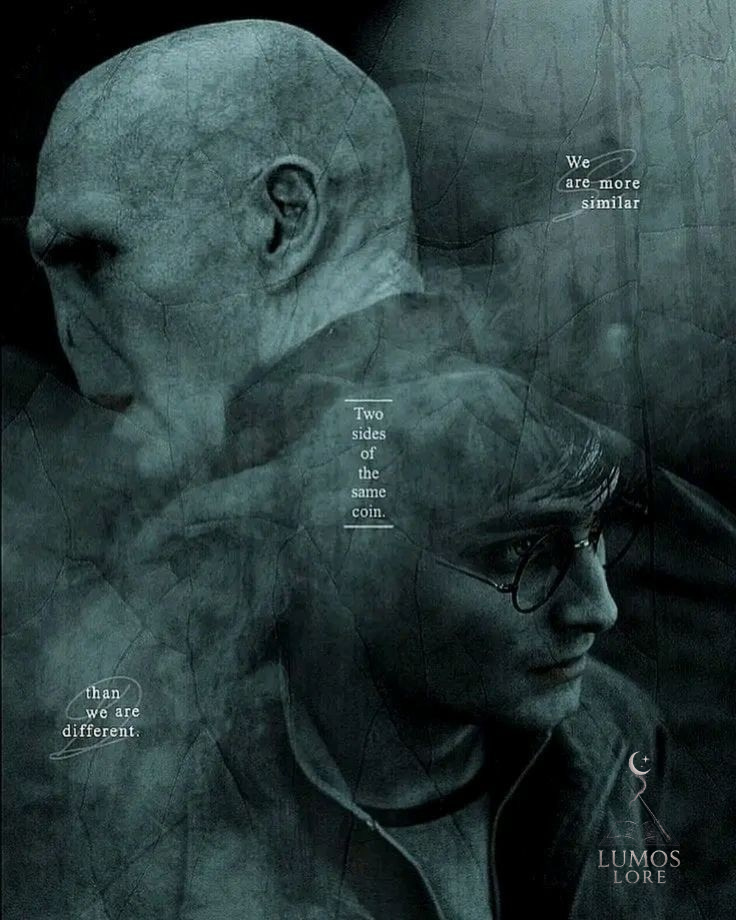
This is the essence of the Dark Magic Paradox. Every time Voldemort sought immortality, he unintentionally extended it to Harry. The curse that should have ended Harry’s life instead created a magical feedback loop between them. The two wizards became bound by the very power Voldemort sought to master — the power to defy death.
The Hallows Factor
The Deathly Hallows adds another fascinating layer to this theory. At the time of the final battle, Harry was the master of all three Hallows: the Elder Wand, the Resurrection Stone, and the Invisibility Cloak. In the legend, possession of all three supposedly makes one the Master of Death.
But what does being the Master of Death truly mean? It does not imply eternal life, but rather an acceptance of mortality. Yet Harry’s situation is paradoxical. He had already died once, willingly, and returned. He held the three objects that symbolize control over death, and he was still tethered to life through Voldemort’s blood and the remnants of dark magic from years before.
Could the combination of these forces have left him permanently altered? Perhaps Harry did not become immortal in the traditional sense, but he may have reached a state where death cannot claim him through unnatural means. This aligns with Dumbledore’s words that Harry was “the true master of death because he accepted it.” Acceptance, paradoxically, might have completed the cycle of immortality Voldemort failed to understand.
Symbolism and Hidden Meanings
Throughout the Harry Potter series, J.K. Rowling uses magic as a mirror for human emotion and morality. Voldemort’s pursuit of immortality represents fear and ego, while Harry’s willingness to sacrifice himself represents love and acceptance. The Dark Magic Paradox beautifully encapsulates this contrast.
Voldemort’s every attempt to evade death only strengthened the one destined to defeat him. In creating Horcruxes, he fractured his soul, but in doing so, he also created the conditions for Harry’s unique survival. Love and dark magic coexisted within Harry, creating a magical balance that Voldemort could never comprehend.
The theme of “death conquered by love” runs deeply through the series. Lily’s sacrifice, Snape’s devotion, Dumbledore’s wisdom, and even Harry’s compassion all reflect the same idea: the true path to immortality lies in what one leaves behind, not in what one takes from others.
The Verdict – Immortality or Destiny?
So, was Harry Potter truly immortal? From a magical standpoint, the answer depends on how one defines immortality. If immortality means the inability to die naturally, then no — Harry can age, weaken, and eventually die of old age. But if immortality means being beyond the reach of death’s unnatural causes — curses, dark magic, and soul separation — then perhaps the Dark Magic Paradox holds some truth.
Harry’s body and soul were shaped by forces no other wizard experienced: sacrificial protection, a soul fragment from Voldemort, blood magic, and the mastery of the Hallows. Combined, these might have created a form of “protected immortality.” He lives not forever, but beyond the reach of unnatural death.
In the end, Voldemort’s downfall came from his inability to understand this. By trying to conquer death, he gave Harry a form of it that he could never achieve. The Dark Magic Paradox remains one of the most fascinating theories in the wizarding world — a reminder that even the darkest magic can sometimes create the brightest light.
Stay tuned for more.
Read all the News about the Upcoming Series Here.